 Pallet
Use Amazon as a reference, not a sales promise
An Amazon reference price helps you set a consistent starting point across a mixed pallet. It does not tell you what every shopper in your store will pay. Product condition, local demand, missing accessories and your return policy can all justify a different shelf price.
Use the exact product whenever possible. A similar title is not enough: compare the UPC, model, size, capacity and pack count. Review the timestamp on the evidence because reference prices change.
Understand percentage of retail versus percentage off
Shelf price before rounding = reference price × store percentage ÷ 100. A $100 reference priced at 60% becomes $60, which is 40% off. If you want 30% off, choose 70% of the reference price.
For a $49.99 reference, 60% gives $29.994 before rounding. Your rounding setting determines the displayed shelf price, so check the final amount rather than assuming the discount remains mathematically exact after rounding.
Research first, then make exceptions
Choose Sell in my store after uploading your manifest. Set your percentage and rounding preference, then run analysis. Review the returned listings and final store prices. Use Edit output when a product needs a specific shelf price.
Keep unmatched items separate from researched value. You can investigate them manually and review an export price, but that manual price should not be mistaken for a fetched market comparison. Likewise, an expensive reference for a bundle should not value a single item at the bundle price.
Check the margin before printing
Suppose an item has a $100 reference, your shelf price is $60 and its allocated landed cost is $35. The $25 difference is gross margin before other expenses. It is not take-home profit: card processing, markdowns, returns, labor, rent and taxes may still apply.
After checking products and prices, approve the rows and download your purchased tag package. Test the printed barcode against your POS. Revisit older inventory when reference prices change or items stop selling; a consistent percentage is a starting rule, not a reason to keep an uncompetitive price.
See a sample output
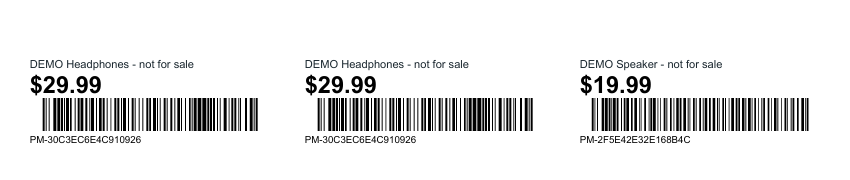
These files were generated with PalletMargin’s exporter using fictional demonstration inventory. Prices are illustrative; the sample is not market research or a ready-to-publish listing.
Download sample barcode tags PDF