 Pallet
Convert the discount before entering it
Percentage of reference price = 100 minus percentage off. A 40% discount means charging 60% of the reference. Charging 40% of reference instead means a 60% discount.
With a hypothetical $100 reference, 40% off produces $60, while 40% of reference produces $40. Across twenty units that confusion changes gross shelf value by $400 before any other costs.
Use a quick conversion check
For 20% off, enter 80% of reference. For 30% off, enter 70%. For 50% off, enter 50%. Check the result on one product before applying the rule to an entire manifest.
PalletMargin’s store setting is labeled Price my store at (% of Amazon). Treat the entered number as the share of the reference price you intend to charge, not the discount you intend to advertise.
Inspect rounding and exceptions
A $39.95 reference at 60% gives $23.97 before rounding. A selected rounding option can change that amount, so use the final reviewed shelf price when checking your margin or preparing tags.
Keep exceptions intentional. A slow-moving product might need a deeper markdown; a product needing cleaning might require extra cost allowance. Review final prices individually rather than assuming one percentage makes every row profitable.
Describe comparisons accurately
A reference observed during research is not a promise that the same price remains available later. Check exact model, pack count and evidence date before displaying a comparison to customers. Avoid implying a damaged item is equivalent to a new complete product.
After approving prices, keep your POS records and printed tags consistent. If you change a shelf price later, update both through your store’s normal process rather than relying on an old label to communicate the change.
See a sample output
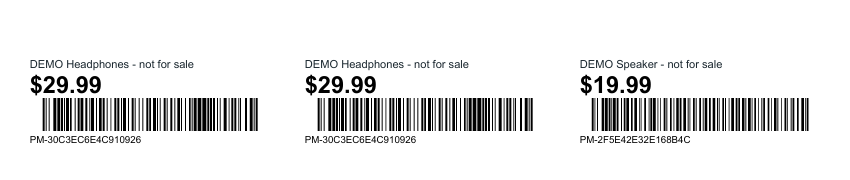
These files were generated with PalletMargin’s exporter using fictional demonstration inventory. Prices are illustrative; the sample is not market research or a ready-to-publish listing.
Download sample barcode tags PDF